العربية
 Türkçe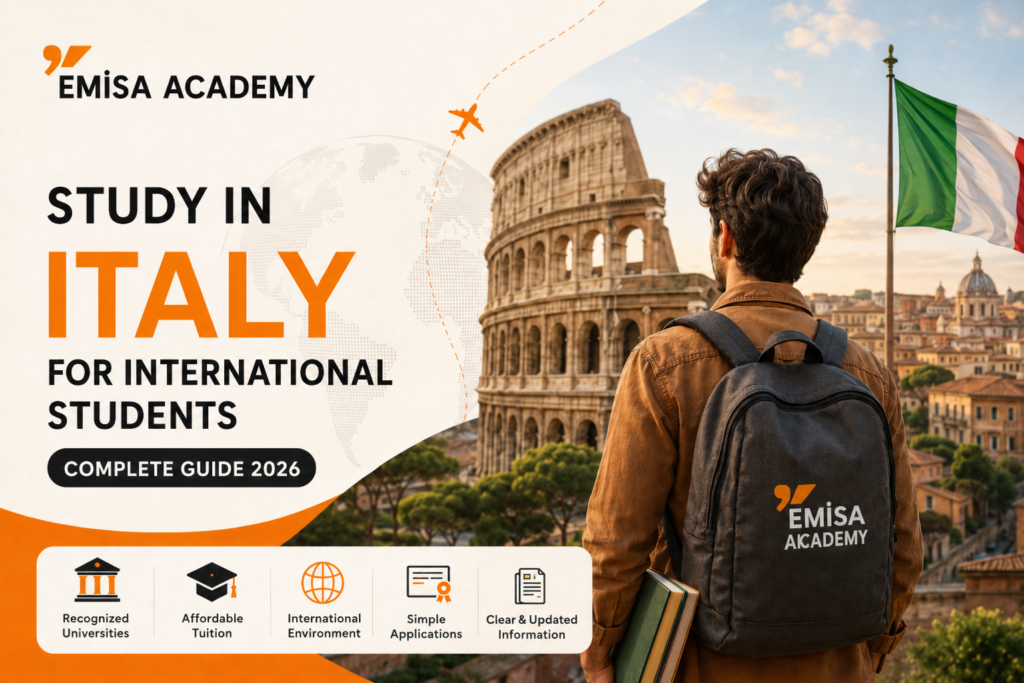
Studying in Italy for International Students | The Comprehensive Guide 2026
Studying in Italy is an attractive and ideal destination for thousands of international students annually, as this ancient European country houses a group of the oldest and most distinguished universities in the world. What makes the Italian educational system unique and preferred by foreign students is linking university tuition fees to the family’s income level, which makes the cost of studying in Italy often low and economical compared to other European countries.
In this comprehensive guide from Emisa Academy, we will review everything that matters to international and foreign students regarding studying in Italy, starting from admission requirements to costs and practical steps.
Why Choose Studying in Italy for International Students?
Italian universities combine the depth of cultural heritage with academic innovation and offer exceptional advantages to their international students:
-
Ancient Higher Education: Italy is home to the University of Bologna, the oldest continuously operating university in the world since its founding in 1088 AD.
-
Subsidized Tuition Fees: University fees start from 0 Euros for foreigners who meet the low-income criteria and standards.
-
Exchange Programs and Scholarships: Excellent funding opportunities are available such as Erasmus+ programs and government and regional scholarships dedicated to international students.
-
Inspiring and Creative Environment: Italy is considered the world’s number one center for fashion, design, and architectural arts.
-
Clear Visa Procedures: The Italian immigration and visa system for students features a clear path and reasonable processing times.
Admission Requirements for Universities in Italy for Foreign Students
To secure your study seat as an expat in one of the Italian universities, you must meet the following requirements:
-
Academic Certificate: Submission of a high school diploma (or equivalent) that is officially translated and certified.
-
Proof of Language Proficiency:
-
IELTS 6.0 certificate (or equivalent) for programs taught in English.
-
B2 level in Italian for programs taught in the local language.
-
-
Entrance Exams: Passing the national or university tests required for specific majors (such as medicine and architecture).
-
Motivation Letter: Submitting a strong motivation letter, which is a fundamental requirement for Master’s and PhD stages.
Costs of Studying in Italy by the Numbers
The budget for studying in Italy for international students is influenced by the type of city and the chosen lifestyle. Expenses can be roughly divided as follows:
1. University Fees and Living Expenses
| Item | Approximate Cost | Notes |
| Annual University Fees | 0 — 3,000 Euros / year | Depends on the financial assessment of the student’s family income |
| Monthly Housing Rent | 400 — 900 Euros / month | Varies by city and housing type (shared/private) |
| Daily Living Expenses | 500 — 700 Euros / month | Includes food, transportation, health insurance, and books |
| Total Annual Budget | 8,000 — 17,000 Euros | General and comprehensive approximate average |
2. City Classification by Cost
-
Highest Cost Cities: Rome and Milan (witness the highest rents for international students).
-
Moderate and Economical Cities: Bologna, Turin, and Florence (offer an excellent student environment at reasonable prices).
Best Fields of Study for Foreign Students in Italy
Many educational programs at Italian universities enjoy broad international recognition, most notably:
-
Medicine and Dentistry: Italian universities offer integrated medical programs in English that are internationally accredited for foreigners.
-
Architecture and Interior Design: Italy ranks first globally in teaching these arts and engineering innovations.
-
Arts and Graphic Design: Curricula combine contemporary techniques with Italian artistic heritage.
-
Fashion and Creative Business Management: Practical study in the heart of global fashion capitals.
-
Civil and Mechanical Engineering: Advanced colleges linked by close partnerships with major European industrial companies.
Application and Registration Steps for International Students
The registration mechanism for international students follows organized and time-bound steps:
-
Step 1: Choose the major and the appropriate university and review the requirements and deadlines.
-
Step 2: Submit the application through the official unified electronic portal for international students, Universitaly.
-
Step 3: Obtain the “Declaration of Value” certificate for academic degrees through the Italian Embassy or Consulate.
-
Step 4: Obtain the initial university admission and book an appointment at the embassy for the visa interview.
-
Step 5: Complete the financial file and secure the documents to obtain the student visa successfully.
How Does Emisa Academy Support You?
International application requirements require precise knowledge of Italian laws and deadlines. At Emisa Akademi, we are here to simplify your path:
Our services include: Handling the coordination and communication process with Italian universities, accompanying you step-by-step during registration via the Universitaly platform, and preparing the legal file for the embassy to ensure a successful study journey free of obstacles.
Start planning your international academic future in Italy today and contact our advisors!