العربية
 Türkçe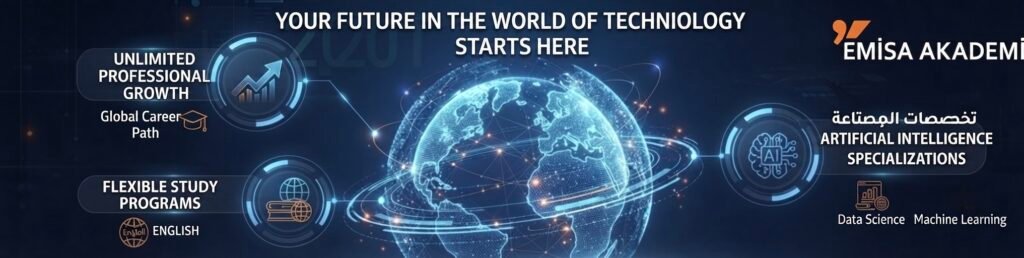
Studying Information Technology and Artificial Intelligence in Europe 2026: The Comprehensive Guide for International Students
If medicine is the oldest and most traditional of disciplines, information technology and artificial intelligence today sit on the throne of the fastest-growing and most in-demand fields in the European job market. With low tuition fees, extensive academic programs taught in English, and real, sustainable employment opportunities after graduation, this sector opens wide doors for international students aspiring to a global professional future. Here is your complete guide to studying technology in Europe for 2026.
Why Choose to Study IT and Artificial Intelligence in Europe?
There are numerous advantages that make the European continent the premier destination for international technology students, most notably:
-
Severe Skills Shortage: European labor markets across various countries face a continuous and tangible shortage of software engineers and data experts.
-
Competitive Salaries: The field is characterized by high salary scales and a fast-rising professional career path.
-
Controlled Costs: Low and very reasonable tuition fees compared to traditional medical and engineering specializations.
-
Admission Flexibility: The vast majority of universities do not require complex or arduous entrance exams.
-
Flexible Work Patterns: Extensive opportunities for remote work or seamless transitions between different European countries after graduation.
Top Future Specializations Available for International Students
European universities host a wide and diverse range of globally demanded technical specializations, including:
-
Computer Science and Software Engineering.
-
Artificial Intelligence and Machine Learning.
-
Data Science and Advanced Analytics.
-
Cybersecurity and Network Protection.
-
Cloud Computing and Internet of Things (IoT).
Best European Destinations for Technology Studies and Annual Tuition
The following table highlights the prominent European countries attracting international students in the field of information technology, along with approximate annual tuition fees:
| Country | Key Advantage of the Destination | Approximate Annual Tuition Fees |
| Poland | Warsaw and Krakow are major European tech hubs | EUR 2,500 – 4,500 |
| Czech Republic | Strong presence of prestigious universities like ČVUT and the specialized FIT faculty | EUR 2,600 – 5,300 |
| Hungary | Advanced academic environment at Óbuda University and Budapest Tech | EUR 2,500 – 5,500 |
| Romania | Strong IT sector and considered one of the lowest-cost options | EUR 2,000 – 5,000 |
| Baltic States | Offers one of the most developed digital environments in Europe | EUR 2,500 – 6,000 |
| Germany | Extensive Master’s programs widely available in English | Almost free (nominal fees in the public sector) |
| Netherlands | Incubator for world-class technical universities | EUR 8,000 – 15,000 |
Regulatory Note: The numbers and timelines mentioned above are approximate and verified from official sources for 2026. They may change annually and vary based on each university’s policy. At Emisa Academy, we carefully verify all final details directly from the official source before taking any step.
Job and Internship Opportunities After Graduation for International Students
Capital cities and major hubs such as Warsaw, Prague, Budapest, and Riga host massive development and software centers for major global companies. This provides practical internship opportunities during the study period and direct, stable employment opportunities after graduation. It is worth noting that a large percentage of international students begin part-time work in their specialized field starting from their second or third academic year.
Admission Requirements and Registration Conditions for International Students
To ensure your acceptance into an IT and artificial intelligence program in Europe, universities typically require the following:
-
High school diploma with a good GPA (with a focus on mathematics).
-
Proof of English language proficiency (such as accredited international certificates) or passing the internal university exam.
-
Some advanced universities require an entrance exam in mathematics or logical thinking.
-
Preparing a personal project portfolio to enhance acceptance chances, even if it is not initially a mandatory requirement.
Golden Advice: How to Excel in the Curriculum and Secure the Job?
In the fast-paced world of technology, your university degree opens the door to the first interview, but your practical projects are what actually get you hired. Make sure to build a professional account on GitHub starting from your first academic year, and actively participate in open-source projects and programming competitions. A university graduate who possesses a practical project portfolio stays ahead of a peer who settles solely for a high academic GPA.
Frequently Asked Questions About Studying Technology in Europe
-
Do I need a prior programming background before applying?
No, most academic programs start with you from scratch and introduce the basics; however, having a simple prior background makes it easier for you to pass the first year with greater efficiency.
-
Is the Artificial Intelligence specialization available at the Bachelor’s level?
Policies vary among universities; some offer it as an independent Bachelor’s major, while others teach it as an advanced track within Computer Science programs with deep specialization at the Master’s level.
Take Your First Step Toward the Future with Emisa Academy
At Emisa Academy, we help you choose the European university and country that best suits your professional ambitions and financial capabilities, and we handle your admission file preparation with complete professionalism. In a field growing at such a rapid pace, the right timing and precise guidance make all the difference.
Contact us today to begin your journey together toward a successful 2026 launch.